Wednesday, October 30, 2013

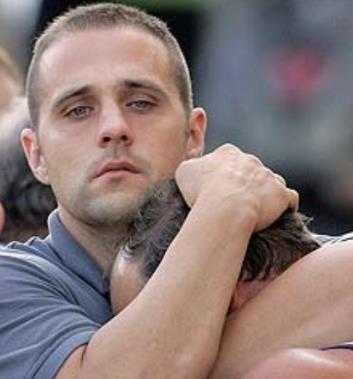
CREATION IS SUFFERING

Rev. Douglas Whitelaw, M.A. is the executive director of Ark Aid Mission in London, Ontario. This post is from his paper 'Toward A Theology of Suffering'.

SECTION 3/9

_____________________________________________________


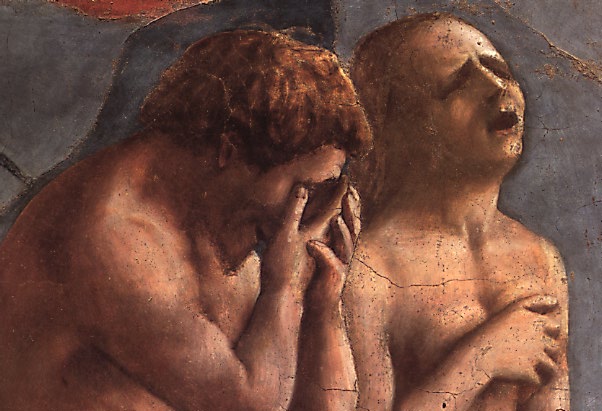
The crux of the matter occurs in the Fall. The systematic theologies will note that God punished humankind – they like to talk about wrath. But Genesis 3 can be read not only as the fall into sin but the beginning of the redemption story. If we read it that way, God's righteousness is recognized but also his covenant love which ultimately means he is the one who suffers with and for us. Note that neither Adam or Eve is cursed. Rather, the serpent and the ground are cursed. The human pair instead hear God describe to them what it will be like for them in the new environment they created with their disobedience.

Sin first of all, offends God or rather is an assault on his character because his word reflects his nature. Sin is serious and God does not overlook it. The cross of Christ is how God satisfies both his mercy and justice. Erickson says God was not changed by the Fall and in the classic sense of immutability that may be so. But God responds to the new situation and he does so lovingly. He would have been entirely justified in carrying out the death sentence he had previously warned Adam about and starting over. But he doesn't do that in the way we might expect.  Instead, he seeks Adam out, tells him the consequences of what he has done and in sending him and Eve from the garden provides clothing to cover their shame. While a covenant is not mentioned here, it is evident that God is acting consistently as if there is one. God is committed to his creature.


Secondly, sin shatters the created order. Rather than living in a garden, we will live in a thorny place requiring struggle. Later biblical references elaborate this, most clearly in Romans 8:20f “for the creation was subjected to futility, not of its own will but by the will of the one who subjected it, in hope that the creation itself will be set free from its bondage to decay and will obtain the freedom of the glory of the children of God” (NRSV). This passage makes clear that God is committed to his creation, too. Sin bends it almost to the breaking point but God has a plan to get back what was lost and doing so in a way that his human creatures, guilty though we  are, can be part of it. This is the story of the rest of the Bible and it is the story of the unfolding and revelation of God's kingdom, the very thing Jesus announced had come with him. Evangelical theology barely knows what to do with kingdom, reducing salvation to personal escape from hell and entry into heaven. But the redemption story is God getting back, along with the people who he loves, his rule on the earth. So, the old hymns and the new choruses that long for escape from this old sinful world will have to go. What Christians are to be longing for and working for is the release of the creation from 'futility' and into 'the freedom of the glory of the children of God.' Ultimately, this is the new heaven and new earth: “The home of God is among mortals, He will dwell with them as their God; they will be his peoples, and God himself will be with them; he will wipe away every tear from their eyes; Death will be no more; mourning and crying and pain will be no more, for the first things have passed away” (Rev. 21:3-4 NRSV).


Sunday, October 27, 2013

THE RESPONSIVE CHRISTIAN

Rev. Douglas Whitelaw, M.A. is the executive director of Ark Aid Mission in London, Ontario. This post is from his paper 'Toward A Theology of Suffering'.

SECTION 2/9

_____________________________________________________


It may be possible to engage in Christian ministry in some contexts and not have to think too much about suffering. But to work with those suffering mental health issues, with the dying, with the incarcerated, with those trapped in poverty and with those for whom the dream of a middle class, Western lifestyle will forever be unattainable, one cannot escape thinking about it. Sometimes we may fall prey to the platitudes, sometimes either the goodness or power of God may be compromised, but working with the very same people that Jesus said he came for – the poor, the captive, the blind, the oppressed (Lk 4:18-19) calls for response. Often enough, this response is compassion and engagement but this paper is an attempt to work out a more comprehensive theology of human suffering so that we are better able to impart meaning and hope in circumstances which deny either and both.


Thursday, October 24, 2013

TOWARD A THEOLOGY OF SUFFERING

Rev. Douglas Whitelaw, M.A. is the executive director of Ark Aid Mission in London, Ontario. This post is from his paper 'Toward A Theology of Suffering'.

SECTION 1/9

_____________________________________________________

Suffering is the universal human experience but a theology of suffering is strangely lacking in evangelical theology. Some of the reason for this may be that suffering is not understood or accepted in Western culture. It rarely is seen to have any redemptive purpose and our technological agenda means we continually strive to eradicate any trace of it. We'll simply invent another device to overcome any limitation, including, if you are the great baseball player Ted Williams, death itself if cryogenics holds any promise. So, Western Christians are immersed in a world that pursues pleasure while looking away from pain and one can't help wondering if that orientation guides theological thought. It certainly seems to have done so in lots of popular theology – health and wealth, purpose driven life, even the fixation on sexual sins to the virtual exclusion of social justice. Much preaching, too has devolved to therapeutic self-help, how to have a better life. Other than the occasional sermon on 'why bad things happen to good people' I can't remember any sermon on a serious study of suffering, other than the one I preached in Africa,where one is confronted with human suffering of unrelenting proportions.

In the absence of a comprehensive theology of suffering, Christians are left to their own devices to somehow reconcile God's goodness and power. Some of course, lose faith. Here in the west we tend to spend a lot of effort on 'why?' which is not far from the question put to Jesus, 'Who sinned?' But Jesus didn't go there. Sudanese Christians often take a more fatalistic view, akin to their Muslim neighbours, that God willed it so, and leave it at that. Rwandan Christians that I spoke to following the 1994 genocide were sure that God loved them enough to be correcting them for their laxity. That was a hard sell to a Western missionary. I think we can notice two things: that there are a variety of somewhat conflicting ways Christians use to make sense of suffering and those responses often seem to be as culturally conditioned as they are rooted in Biblical revelation.

You might think that pastoral training would take some pains to explore a theology of suffering, but not so. It is possible to get through a complete theological curriculum without ever encountering the issue and I daresay, many students do just that. The last systematic theology book I purchased, by Millard Erickson while recognizing social sin, lists the effects of sin on the sinner as, “ enslavement, flight from reality, denial of sin, self-deceit, insensitivity, self-centeredness and restlessness.” Obviously suffering is at least entailed in all these consequences but suffering itself is not explored as part of the human condition. Western theology has been much more interested in the forensic aspects of the fall and redemption than affective aspects. The only place where suffering appears in Erickson's index is in “suffering as part of our union with Christ.” To be sure, such suffering is real. But only considering suffering at that juncture omits the redemptive role suffering plays in bringing people to Christ and overlooks that Christ has redeemed suffering, too as sinners witness Christian fortitude and come to faith.


Saturday, July 20, 2013

URBAN CRY SCHOOL OF MISSION

New Song Church is home to Urban Cry School of Mission. Watch this video with Rielly McLaren as he talks about the need for urban ministry training.


Thursday, January 31, 2013

BROTHERS IN THE RACE TOGETHER


To what can we compare the Kingdom of God? It is like two brothers who race together. Specifically Conner & Cayden Long.

Thursday, October 11, 2012

Community Builder Conference - Nov 2,3


An amazing conference with Shane Claiborne, David Adcock and many more. Details and registration are here:

http://newsongwindsor.blogspot.ca/2012/10/blog-post.html

Saturday, March 31, 2012

WWJD WITH THE PROVINCIAL BUDGET?


In Ontario, a single person receives under $600 per month if they are on social assistance. With that amount they are expected to pay rent, buy groceries, travel to job interviews and take care of essential needs.

If that single person is disabled, Ontario Disability Support Program (ODSP) pays up to $979 per month.[i]

If you qualify to receive this government assistance, it is likely that you have been unable to find employment that will provide better than this. Even if you work full-time at a job paying minimum wage, you will still make an annual income that falls below the poverty line.

If you have special dietary needs because of a health condition, food allergy or disease you may qualify for up to an additional $250 per month.


Last Monday[ii] in Toronto, Doctor Roland Wong appeared before the College of Physicians and Surgeons of Ontario for a disciplinary hearing to determine whether he followed professional standards in prescribing the special food allowance to more than 14,000 patients.[iii]

He did this so that poor people could eat healthy food. He is being investigated to see if he stretched the rules in order to provide nutrition to people who did not qualify to eat healthy.


Dr. Wong did not come to his hearing alone. ‘His poor supporters rolled in with walkers, combat boots and a red banner that declared “Raise Welfare and Disability Rates.” ‘[iv]

It is well documented that poverty and poor health go together. The more money you have, the greater the likelihood of living longer and healthier. If you address poverty, you reduce the need for healthcare.

In one of the richest nations of the world, we do not provide enough for our most vulnerable citizens. With the current release of the Ontario budget, there is a freeze on social assistance and disability allowances.

In a press release this past week, a group known as ‘Doctors And Lawyers For Fair Taxation’ [v]appealed to finance minister Dwight Duncan to have fair taxation practices. They are high wage earners who are saying ‘Tax us. We can afford it.’ They recognize that taxation most affects the poorest.

If there are doctors and lawyers who feel a responsibility to the poor, what is to be our response to addressing poverty and equity issues?

New Song Church identifies itself as a group of people called by God to get involved in poverty. This is a passion for us. People who attend this church long term tend to have compassion for the well being of others.

The theologian Frederick Buechner said, ‘The place God calls you to is the place where your deep gladness and the world’s hunger meet.’[vi]

I hope that you have discovered the deep gladness that comes from God and responded to the hunger of the world.

As followers of Jesus Christ, how are we to live in response to the world around us? The gospel of Jesus Christ is good news for the poor and bad news for the rich. Is Jesus bringing you good news or bad?